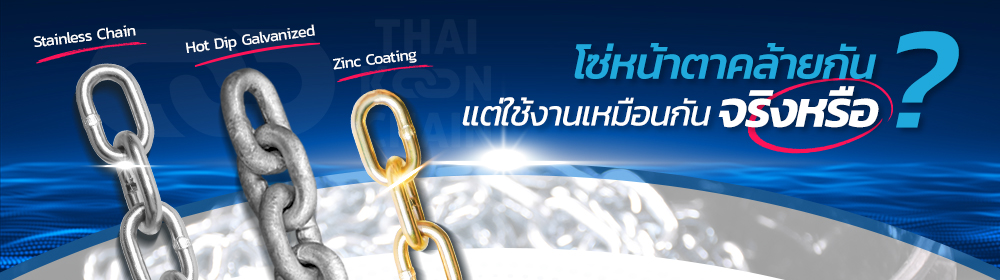
Do Similar-Looking Chains Perform the Same?
When engineers, procurement teams, or contractors need to select steel chains for a new project, some of the most frequently asked questions include:
- What is the difference between Zinc-Plated and Hot-Dip Galvanized steel chains?
- Are stainless steel chains always the best choice?
- Which type of chain is best suited for outdoor or coastal environments?
Although all three types of chain offer some degree of corrosion resistance, they differ significantly in coating or material, manufacturing process, durability, and cost. Selecting the appropriate chain for the operating environment can help reduce maintenance requirements and extend service life.
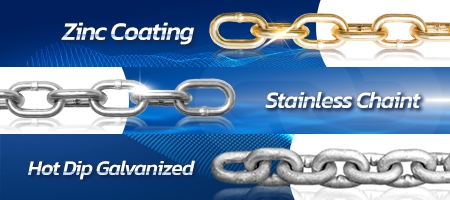
Zinc-Plated Chain (Electro-Galvanized Chain)
Zinc-plated chain is typically made from carbon steel and coated with a thin layer of zinc through an electroplating process.
Advantages
- Smooth, bright finish
- Economical
- Better corrosion resistance than uncoated carbon steel chain
- Suitable for general indoor applications
Typical Applications
- Safety barriers
- Decorative applications
- Agricultural applications
- Indoor factory applications
- General-purpose securing applications
Considerations
The zinc coating is relatively thin compared with hot-dip galvanized coatings, making zinc-plated chain less suitable for prolonged exposure to high humidity, rain, or coastal environments. For outdoor applications or environments with greater corrosion exposure, a more corrosion-resistant chain or coating may be appropriate.
What Is a Hot-Dip Galvanized (HDG) Chain?
A hot-dip galvanized (HDG) chain is immersed in molten zinc, creating a relatively thick, metallurgically bonded zinc coating on the steel surface.
Advantages
- Thicker zinc coating
- Excellent corrosion resistance
- Well suited for outdoor applications
- Potentially longer service life under comparable conditions
Typical Applications
- Outdoor installations
- Ports and harbors
- Coastal areas
- Farms and greenhouses
- Humid industrial environments
- Long-term outdoor installations
Considerations
- Higher cost than electro-galvanized chain
- Slightly duller and rougher surface finish, which is normal for the HDG process
Did You Know?
Both zinc-plated and hot-dip galvanized chains use zinc to provide corrosion protection. The main differences are the coating process and coating thickness, which can significantly affect corrosion resistance and service life.

Stainless Steel Chain
Unlike galvanized chains, stainless steel chains rely on the chromium content in the alloy to form a thin, passive oxide layer that provides corrosion resistance.
Advantages
- No protective coating required
- Excellent corrosion resistance
- Easy to clean and maintain
- Well suited for hygienic and wet environments
Typical Applications
- Food processing
- Beverage processing plants
- Pharmaceutical manufacturing
- Premium architectural applications
- Marine applications
- Frequent wash-down environments
Considerations
- Generally higher cost than zinc-plated or hot-dip galvanized chains
- Select the appropriate stainless steel grade based on the operating environment, particularly in chloride-rich coastal or marine environments.
Comparison of Chain Materials
|
Property |
Zinc-Plated |
Hot-Dip Galvanized (HDG) |
Stainless Steel |
|
Corrosion Resistance |
★★★★★ | ★★★★★ | ★★★★★ |
|
Outdoor Use |
Fair |
Excellent |
Excellent |
|
Coastal Use |
Limited |
Suitable |
Highly Suitable* |
|
Appearance |
Bright |
Matte |
Premium |
|
Typical Service Life |
Moderate |
Long |
Long to Very Long* |
|
Relative Cost |
Low |
Medium |
High |
Actual performance and service life depend on the specific material grade, coating thickness, humidity, chemical exposure, operating conditions, and maintenance.
Which One Should You Choose?
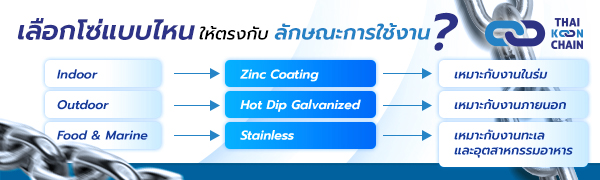
Choose Zinc-Plated Chain If:
- The chain will be used primarily indoors
- The environment has relatively low humidity
- Cost is an important consideration
- High corrosion resistance is not required
Choose Hot-Dip Galvanized Chain If:
- The chain will be exposed to outdoor conditions
- Rain or high humidity is expected
- Additional corrosion protection is required
- Longer service life is desired under comparable conditions
Choose Stainless Steel Chain If:
- The chain will be frequently exposed to water
- The application involves food or pharmaceutical processing
- The chain will be used in marine or other corrosive environments
- Easy cleaning and low maintenance are important
Selecting the Right Material Saves More Than Repairs
While chain grade is important, the chain material and surface protection also play a significant role in corrosion resistance and service life. Selecting the appropriate chain from the beginning can help reduce premature replacement, lower maintenance costs, improve safety, and maximize long-term value.
Always evaluate the following factors together:
- Chain material
- Surface coating or protection
- Chain grade
- Working Load Limit (WLL), where applicable
- Actual operating conditions
- Applicable standards and manufacturer's specifications
Notes
- Electro-galvanized and hot-dip galvanized chains both use zinc for corrosion protection, but they differ in coating process and coating thickness.
- Stainless steel chains achieve their corrosion resistance primarily through the properties of the alloy itself rather than through a zinc surface coating.
- Stainless steel grade selection is important, particularly in chloride-rich coastal and marine environments.
- Actual corrosion resistance and service life vary depending on the material, environment, loading, maintenance, and other operating conditions.
References
- ISO 1461:2022 – Hot-dip galvanized coatings on fabricated iron and steel articles — Specifications and test methods.
- ASTM A153/A153M – Standard Specification for Zinc Coating (Hot-Dip) on Iron and Steel Hardware.
- THAI KOON CHAIN – Certification & Standards.


